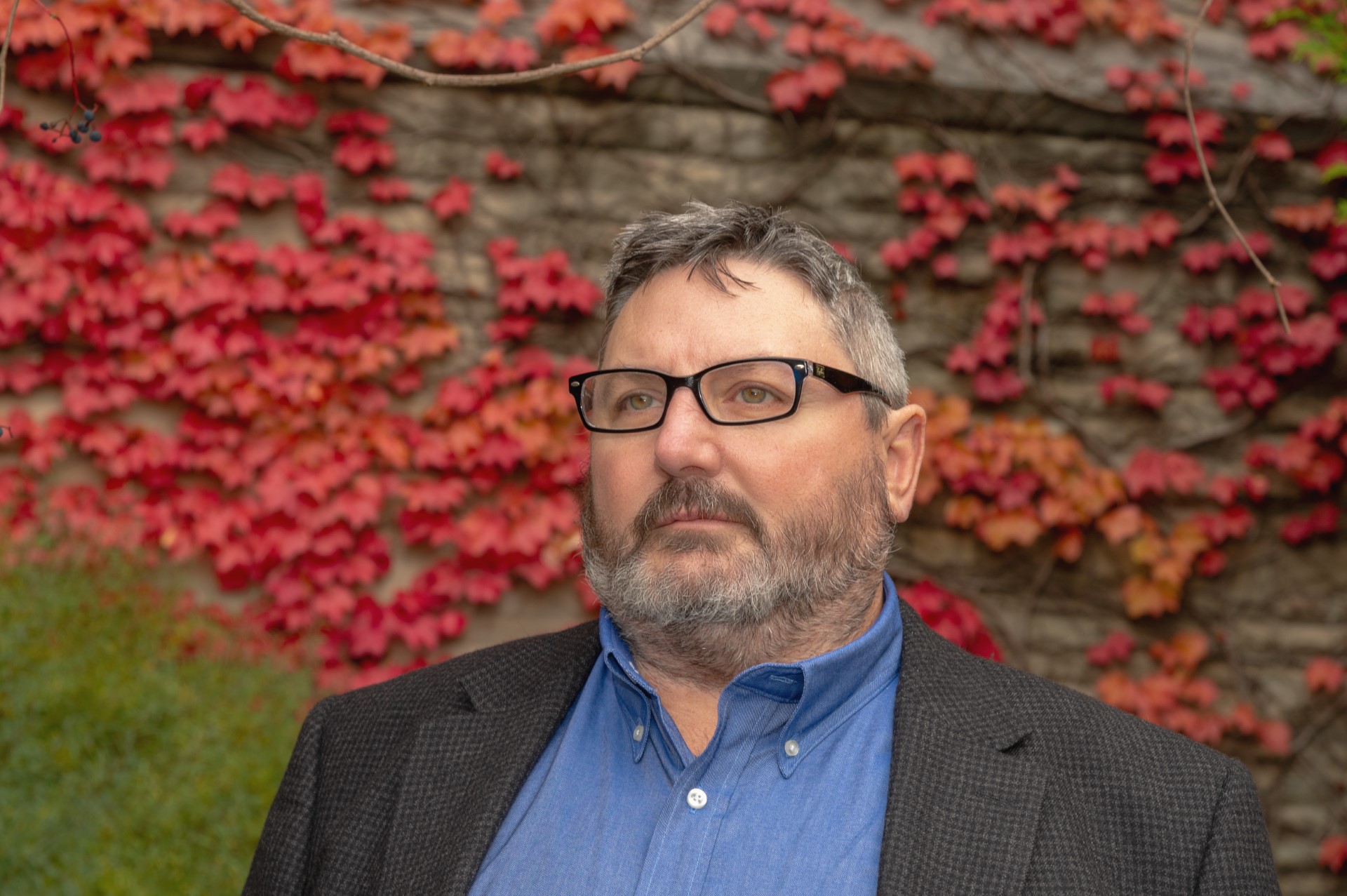
Associate Professor of Philosophy (with tenure)
The University of Western Ontario · London, Ontario, Canada
I am a historian of philosophy working primarily on the early modern period (1600–1750) and the late medieval period (1450–1600). My research centres on John Locke, Nicolas Malebranche, George Berkeley, David Hume, and Gottfried Wilhelm Leibniz, with additional interests in medieval logic, the history of the philosophy of language, early modern moral philosophy and natural law, and feminist early modern philosophy.
I have been at Western since 2005, where I hold a tenured appointment in the Department of Philosophy. I serve on University Senate (Arts and Humanities) and lead the Western Ontario Early Modern Philosophy (WOEMP) research group. I am also an active track cycling commissaire at the provincial and national level.
I am currently on sabbatical (July 2026–June 2027), working on a critical edition of Locke’s Essay concerning Human Understanding for Broadview Press and completing archival research at Trinity College Dublin.
Why I Am a Historian of Philosophy
I began my intellectual career as a mathematics student. Once I had satisfied my mathematics requirements and most of my history ones, I turned to philosophy—drawn in by a professor whose intellectual character combined irreverence and rigour, constant dissatisfaction with current understandings, and a recognition of the value of real life. He taught me the importance of the Socratic aspects of being philosophical: following truth and truth alone; speaking truth to power; persistence in one’s considered judgment even if it runs counter to popular sentiment.
History of philosophy, for me, is just as much a properly philosophical endeavour as metaphysics or philosophy of language. The historic figures we study had a philosophical vision, and their texts were written to convey that vision to their contemporaries. It does not follow that these figures fully grasped that vision, or that their texts adequately convey and exhaust it. The historian’s task is to recover, analyse, and assess that philosophical vision—using the primary texts, supplementary materials, and the intellectual context as guides and constraints, while bringing genuine philosophical judgment to the work.
What Kind of Historian
If one places contextualist historians on one end of a spectrum and analytic historians on the other, I am somewhere near the middle, but oriented toward the contextual. Contextual analysis is a necessary condition of good history of philosophy—but not a sufficient one. Necessary too is genuinely philosophical analysis conducted from within the figure’s own intellectual milieu. I view the history of philosophy as a contribution to our philosophical imagination: properly done, it allows us to understand and appreciate philosophical vantage points quite different from our own, and opens new avenues for the critical distance required to analyse our own assumptions more accurately.
Academic Positions
The University of Western Ontario — Associate Professor (with tenure), 2011–present; Assistant Professor, 2005–2011
Sogang University — Distinguished Foreign Visiting Professor, 2017
University of Nebraska at Omaha — Visiting Assistant Professor, 2005
Illinois Wesleyan University — Visiting Assistant Professor, 2003–2004
Education
Ph.D., Philosophy — University of Iowa, 2003
M.A., Philosophy — University of Iowa, 1999
B.A., Philosophy, Mathematics, History — Simpson College, 1994
 Dr. Benjamin Hill